
Internship Program
Program Details & Qualifications
- Internship projects are announced each fall, and prospective students can apply to up to 2 internships.
- Each selected applicant will be provided a stipend totaling $5,700 (dispersed as 3 monthly payments) and is required to work a minimum of 300 hours over the summer.
- Internships may be in-person or hybrid, depending on preceptor needs.
Qualifications and Responsibilities
Qualifications:
- Upper-level undergraduate or Graduate-level at the time of internship
- Ability to commute to weekly internship seminars in Ann Arbor
- Demonstrated interest in injury prevention
Responsibilities may include:
- Assisting in planning, developing, implementing, and evaluating injury prevention projects
- Conducting literature searches and statistical analyses
- Attending injury prevention-related workshops, seminars, and meetings
- Developing educational materials and toolkits
Preceptors
Interested in hosting an intern next summer?
The University of Michigan Injury Prevention Center will fund five intern positions next summer supporting work in injury prevention. The Center will recruit graduate and upper-level undergraduate students interested in injury prevention research or practice experiences in specific topic areas.
The goal is to offer students an opportunity to gain mentored research and practice-based experience in injury prevention. Internships should provide students an opportunity to work approximately 27-30 hours/week (a cumulative total of no less than 300 hours for the summer).
Topic areas eligible for paid
intern placement include
the prevention of:
- Concussion
- Drug Overdose and Substance Abuse
- Older Adult Falls
- Transportation Safety
- Suicide Prevention
- Violence Prevention
Selection Process and Student Matching
You will know if your project has been selected on or before November 17. Students will then have the opportunity to apply to work on your specific project. Finally, the IPC will review applicants and select a qualified candidate for you in late January 2027 after all student applications have been reviewed. During their internship, students will receive a stipend of $5,700.
Submission Deadline
Please submit your information by Monday, November 2, 2026
If your department/organization is interested in providing a learning opportunity, we’d like to hear from you.
If you have questions, please email Taylor Hautala at [email protected] .
Past Project Descriptions:
Please Note: While a position itself may be remote, IPC requires attendance at weekly in-person seminars and events held in Ann Arbor throughout the summer.
Open to Undergraduate and Graduate Students | Hybrid Position–Ann Arbor
Behavioral Sciences Group at the University of Michigan Transportation Research Institute has an internship opportunity that includes a wide range of research experiences on a teen driving project funded by the National Academies of Sciences, Engineering and Medicine. The project’s goal is to provide actionable information to help states optimize teens’ parent-supervised practice driving during the driver licensing process with the ultimate goal of creating safer teen drivers and reducing teen crash risk. The project includes an efficacy evaluation of an evidence-based curriculum for a parent meeting about supervising practice driving and the development of a toolkit to be disseminated to parents by State Highway Safety Offices and other stakeholders. The following activities are expected to take place during the internship: data collection for the efficacy evaluation (surveys from parents and teens, teens’ driving records from the State); data analysis for the efficacy evaluation; report preparation for the efficacy evaluation; preparation of a draft of the tool kit; and planning a virtual workshop to present the draft tool kit to stakeholders and obtain feedback. The internship will also include opportunities to work on projects related to distracted driving, child passenger safety, and employer-based driving safety programs.
Open to Graduate Students | Hybrid Position–Ann Arbor
The Mental Health Improvement through Community Colleges (MHICC) initiative aims to improve community college student access to mental health services. During summer 2026, we are looking to develop resources for the MiTRENDS Mental Health Hub related to (a) campus suicide prevention best practices and (b) implementation best practices and key considerations for campus Behavioral Intervention Teams. We are seeking a graduate level intern with interests in mental health, suicide prevention, and translating research to practice to assist in developing these resources. This project will include: (a) Gathering and synthesizing existing research, literature, and resource guides on the identified topics; (b) Engaging with community college partners and other topic experts to garner professional insights; (c) Outlining and drafting various resource guides, reports, and policy briefs. Beyond working with the immediate MHICC team, this project allows the opportunity for a student to engage with, network, and learn from various public health, mental health, and higher education practitioners across MHICC’s partnering organizations.
Open to Undergraduate and Graduate Students | Remote Position*
Transforming Youth Suicide Prevention in Michigan (TYSP) is a statewide initiative that aims to reduce youth suicide by strengthening partnerships, improving clinical care, and expanding community-based prevention and intervention efforts. The program focuses on youth up to age 24 with targeted strategies for crisis-affected, child welfare-involved, and suicide-bereaved youth. TYSP prioritizes equity, lived experience involvement, and systemic coordination to better support at-risk youth and their families across Michigan through synergistic statewide collaborations. This project will include: (a) Assisting in reviewing and updating the Michigan Suicide Prevention Plan to include best practices and evidence-based strategies and updating language or format; (b) Compiling and analyzing data from key informant interviews and community listening sessions; (c) Creating visual materials for youth/young adult suicide mortality data; (d) assisting in development of postvention related webinars and state guidelines.
Open to Graduate Students | Remote Position*
Current surveillance of fatal and nonfatal e-scooter and e-bicycle injuries at the state level is limited. To obtain a better understanding on the extent to which e-scooter and e-bicycle injuries occur, who is affected by them, and to create better safety messages, a more thorough review of injury and death data is needed. The intern would review current literature and coding guidance to assist the injury epidemiologist in the development of an exploratory indicator for both fatal and nonfatal e-scooter and e-bicycle injuries. They would then analyze aggregate death certificate and hospital discharge data to examine the frequency and type of injuries as well as high risk groups for each. The results of this analysis will then be written up and used to inform future surveillance efforts and educational and prevention focused materials in conjunction with MDHHS injury prevention specialists located in the Injury and Violence Prevention section.
Open to Graduate Students | Hybrid Position–Ann Arbor
The selected intern can choose the project that aligns most with their interests and professional goals. Project 1: We need to convert materials for a perinatal intervention for postpartum women with a history of ACEs and PTSD into an intervention designed for “parents” so that it is both gender inclusive and able to be used with couples who are co-parenting. Project 2: We need to produce a set of 8 videos to be used for training interveners. They will demonstrate how to respond to unexpected or sensitive situations that can happen in the process of providing the program. Both projects will involve working closely with the co-developers of the Survivor Moms’ Companion psychoeducation curriculum. Most importantly, they also will require some patient/public involvement or community engagement.
Open to Graduate Students | Hybrid Position–Ann Arbor
Building on the work of a previous intern, which we are preparing for peer review, the intern would use Medicare data to assess rural-urban differences in emergency department visits for falls and fractures associated with extreme heat and extreme cold events in Michigan. The selected student should have some experience with programming in R and epidemiologic regression methods, including Poisson regression. The student will work with large data sets and should be willing to learn the data table package in R.

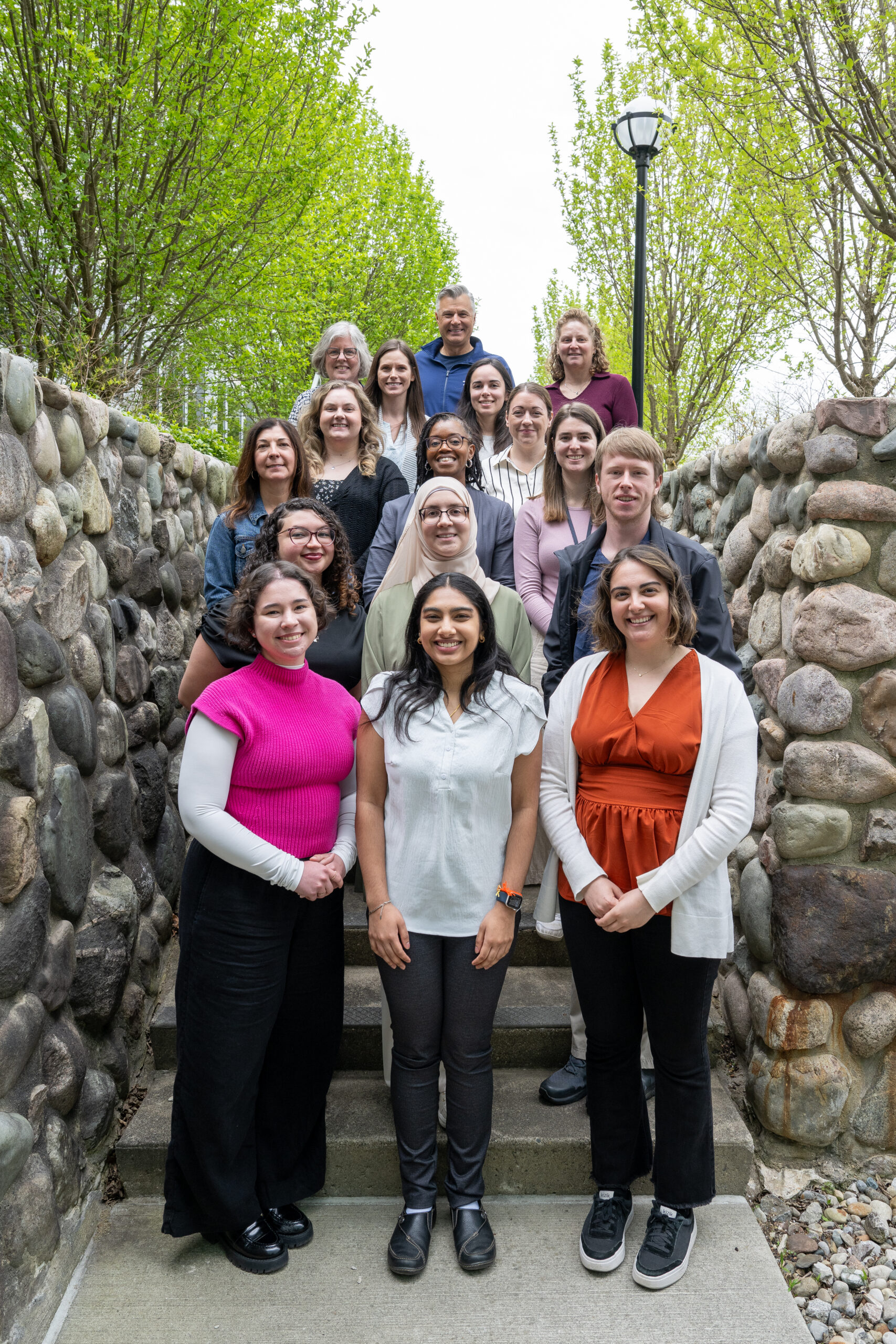
Featured Summer 2026 Interns

Shanel Baxter
MPH Candidate, Health Behavior and Health Equity, U-M School of Public Health
Mentor(s): Dr. Julia Seng
Injury Prevention Focus Area: ACEs
Summer Project: This summer, Shanel will be working with the non-profit “Growing Forward Together” to adapt the Survivor Moms Curriculum (designed for postpartum women with a history of ACEs and PTSD) into an intervention for parents to support co-parents. Shanel will also be working to adapt the curriculum to support survivor moms who may be coping with opioid or other substance use.

Lucian Kapushoc
MS Candidate, Biostatistics, U-M School of Public Health
Mentor(s): Dr. Carina Gronlund
Injury Prevention Focus Area: Older Adult Falls
Summer Project: This summer, Lucian is working with the Institute for Social Research examining the association between weatherization of the home and fall injuries. The research team is working to see if there is a connection between extreme heat exposure and the incidence rate of fall injuries.

Anna Rodriguez Santana
MPH Candidate, Health Behavior and Health Equity, U-M School of Public Health
Mentor(s): Ms. Lindsay DeCamp and Ms. Alicia Goodman
Injury Prevention Focus Area: Suicide Prevention
Summer Project: This summer, Anna will be collaborating alongside the Transforming Youth Suicide Prevention in Michigan (TYSP) project. Within this project, she will be developing health communication sheets related to suicide data, aiding in the update of the Michigan Suicide Prevention Plan, and analyzing qualitative findings of conversations with youth-serving community partners.

Nour Selmane
MPH Candidate, Health Behavior and Health Equity, U-M School of Public Health
Mentor(s): Dr. Shawna Smith
Injury Prevention Focus Area: Suicide Prevention
Summer Project: This summer, Nour will work with the Mental Health Improvement through Community Colleges (MHICC) initiative to develop resources for the MiTRENDS Mental Health Hub focused on campus suicide prevention and Behavioral Intervention Teams. Nour will support this work by synthesizing existing research and best practices, engaging with community college partners and subject matter experts, and contributing to the drafting of implementation guides and briefs to support mental health efforts in higher education settings.

Saanvi Srinivasan
MPH Candidate, Epidemiology, U-M School of Public Health
Mentor(s): Mr. Allen Stout and Ms. Ali Bianco
Injury Prevention Focus Area: Transportation Safety
Summer Project: This summer, Saanvi is working with injury epidemiologists at the Michigan Department of Health and Human Services to review current literature and analyze aggregate death certificate and hospital discharge data on fatal and non-fatal e-bicycle and e-scooter injuries. Her project focuses on gaining a better understanding of the extent of who is affected, how these injuries occur, and examining the frequency and type of injuries as well as high risk groups for each.

Anna Vostrizansky
MPH Candidate, Health Behavior and Health Equity, U-M School of Public Health
Mentor(s): Dr. Renee St. Louis
Injury Prevention Focus Area: Transportation Safety
Summer Project: This summer, Anna will be working with the Behavioral Science Group at the University of Michigan Transportation Research Institute (UMTRI) to develop innovative resources that help optimize teens’ parent-supervised practice driving during the driver licensing process, with the goal of creating safer teen drivers and reducing crash risk. This project will include developing an interactive toolkit, conducting surveys with parents and teens to evaluate effectiveness, and planning a virtual workshop to present the draft toolkit to stakeholders and gather feedback.
Frequently Asked Questions
The internship application will be submitted through a Qualtrics form. Once the application period is open, the form will be linked above.
Letters of recommendation can be submitted through the Qualtrics link with the entire application, or directly
to Taylor Hautala ([email protected]) if that is the preferred/most convenient method of delivery.
Yes, you can apply for up to two projects. In the application, there is a space to mark which projects you
would like to be considered for.
The more you can speak to your interests (either in terms of injury-related topics you have an interest in or
would like to learn more about, skills you want to acquire, or experiences you hope to gain) the better. You are
welcome to provide examples if that helps.
U-M IPC internships are open to University of Michigan students only (including U-M Flint and Dearborn).
Only U-M public health graduate students are eligible for placement at the National Center for Injury Prevention
and Control at the Centers for Disease Control and Prevention in Atlanta.
It varies by project. Each project has unique needs, and the working environment is ultimately up to your
mentor. We do our best to indicate the anticipated working environment in the project’s description. As part of
the program, interns are required to attend a once-a-week seminar hosted by the U-M IPC, many of which take
place in person. As such, interns must be located in or around Ann Arbor, or, close enough to commute to these
events.