Medication For Opioid Use Disorder (MOUD)
While many valuable resources in the Safer Prescribing Toolkit still use the term “MAT,” our website will refer to it as “MOUD” as this term generally carries less stigma.
The goal of MOUD is to reduce or eliminate harmful opioid cravings and illicit use, encourage treatment engagement, and improve the patient’s quality of life. Any clinician with a DEA license can prescribe buprenorphine for OUD since the elimination of the federal waiver requirement in 2022. There is no “one-size-fits-all” approach for MOUD initiation, and the basic steps listed below should be tailored to individual needs. Please look at the resources listed below for comprehensive information.
Buprenorphine and methadone are first-line medications
There are three evidence-based medications to treat opioid use disorder:
Buprenorphine is a partial opioid agonist and the most practical option for primary care clinicians. Buprenorphine is available in various formulations with and without naloxone.
The FDA-approved formulations include:
- Suboxone or Bunavail – sublingual films
- Zubsolv or Subutex – sublingual tablets
- Sublocade – monthly subcutaneous injection
- Brixadi – monthly subcutaneous injection
Methadone is a full opioid agonist and requires daily dispensing at federally certified opioid treatment programs
Extended-release naltrexone is an opioid antagonist that requires patients to abstain from opioids for approximately one week before the first dose to avoid precipitated withdrawal
There are three methods for buprenorphine initiation
Consider engaging with an expert – OPEN has free support for primary care providers initiating MOUD.
Method 1: Low-Dose Initiation
This method is a slow increase in dose of buprenorphine over 5 to 7 days while patient continues to use current opioid.
This is best for patients who are not actively in withdrawal or do not want to experience withdrawal. This also requires that the patient follow instructions carefully.
Method 2: Standard Initiation
This method is for patients starting buprenorphine while in withdrawal.
This is best for patients experiencing moderate withdrawal symptoms. If the patient is not in withdrawal, the patient should stop the opioid for 8-72 hours and start buprenorphine when in withdrawal. This method often requires some monitoring during the initial withdrawal period.
Method 3: High-Dose Initiation
This method is for patients who would benefit from receiving rapid initiation of buprenorphine.
This is best for patients in an emergency department practice needing a quick switch to buprenorphine. This should not be done in the community setting.
Methadone is distributed at physical locations
Often, patients with chronic pain are good candidates for methadone treatment. Patients must go to physical opioid treatment programs (OTPs) to receive their medication daily. Physicians can refer to a facility nearby by searching findtreatment.gov.
Extended-release naltrexone is injected monthly by a healthcare provider
For a patient not actively using opioids, naltrexone can be a good option. It requires monthly injections that can be administered by any healthcare professional. There are some medication interactions and patients must be free of opioid withdrawal signs and symptoms, so it is beneficial to discuss these with your patients.
Filters
Selecting filters will auto-adjust the list.
Type at least three characters, and the list will auto-filter.
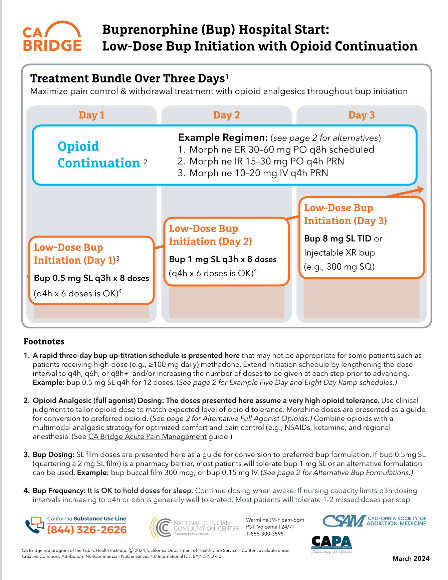
Bridge to Treatment: Buprenorphine Hospital Start – Low-Dose Bup Initiation with Opioid Continuation
This organization has extensive resources for primary care, hospital, and ED providers including detailed flow charts for high dose / standard dose / low dose buprenorphine initiation.
Medications for Opioid Use Disorder
Executive Summary of the Focused Update of the ASAM National Practice Guideline for the Treatment of Opioid Use Disorder
A summary of the updated and revised ASAM National Practice Guidelines with recommendations for evaluation and treatment of opioid use disorder, opioid withdrawal management, psychosocial treatment, special populations, and opioid overdose
Medications for Opioid Use Disorder
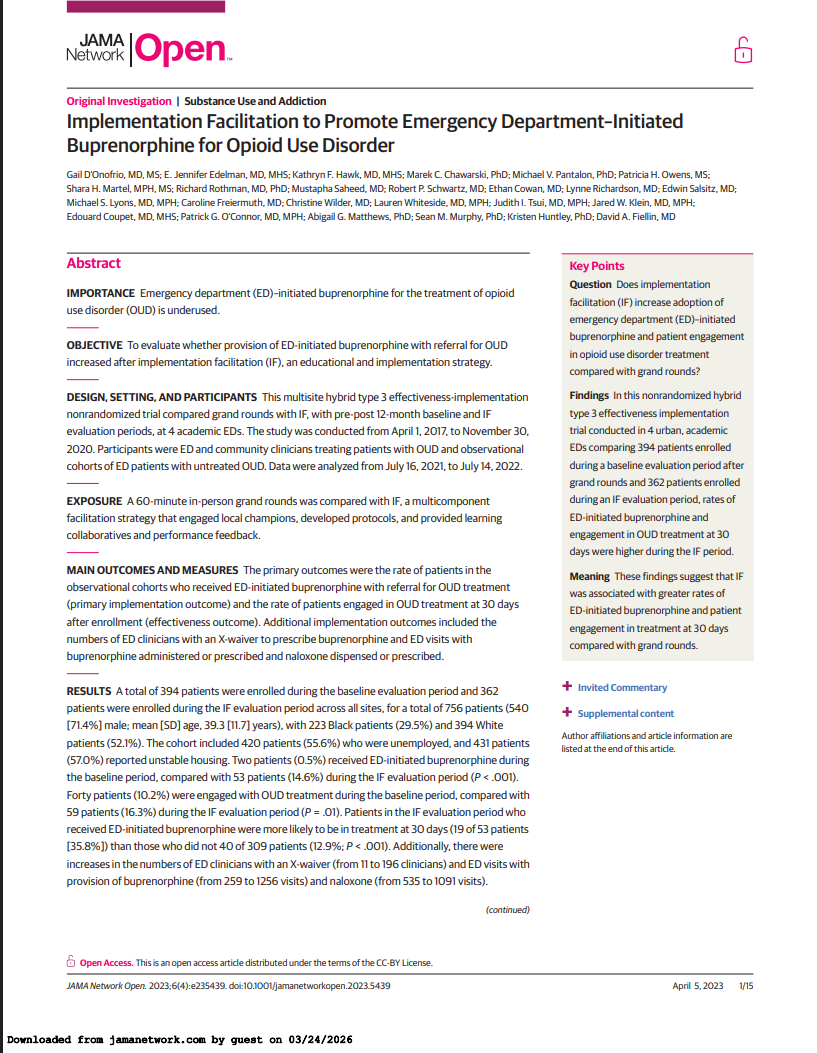
Implementation Facilitation to Promote Emergency Department–Initiated Buprenorphine for Opioid Use Disorder.
A peer-reviewed article discussing the effectiveness of implementation facilitation in ED-initiated buprenorphine and patient engagement in opioid use disorder treatment.
Medications for Opioid Use Disorder
Medication-Assisted Treatment and Recovery Best Practice Guide
This guide, prepared for the Michigan Department of Health and Human Services, details MOUD and Recovery best practices.
Medications for Opioid Use Disorder
MOUD and Acute Pain Management Webinar
In this session, Eliza Hutchinson and Nick Rademacher discuss MOUD and acute pain management in the clinic and emergency department.
Medications for Opioid Use Disorder
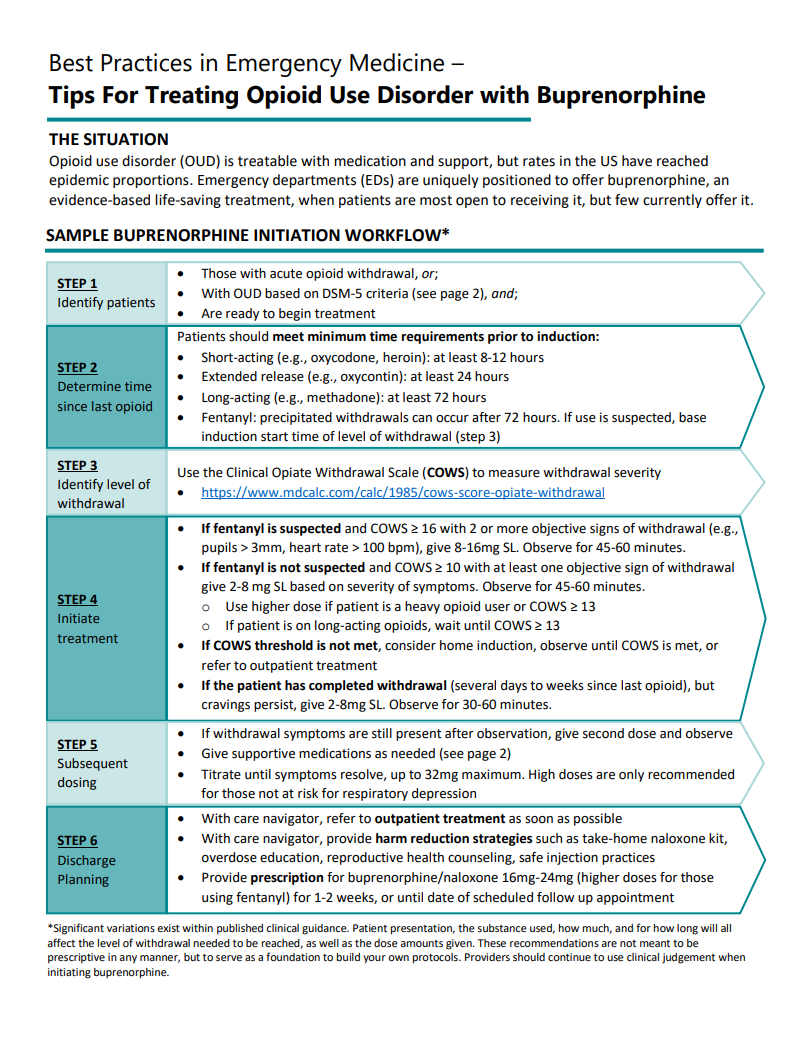
Oregon Health Leadership Council: Best Practices in Emergency Medicine – Tips For Treating Opioid Use Disorder with Buprenorphine
Handout with best practice tips for treating opioid use disorder with buprenorphine in emergency departments.
Medications for Opioid Use Disorder
Providers Clinical Support System (PCSS) – Practice-Based Guidelines: Buprenorphine in the Age of Fentanyl – May 2023
A comprehensive resource with links to additional webinars and articles.
Medications for Opioid Use Disorder
Reimbursement for Medications for Addiction Treatment Toolkit
Provides an overview of MOUD billing, information about Medicaid payment policies, alternative payment models, and more.
Medications for Opioid Use Disorder
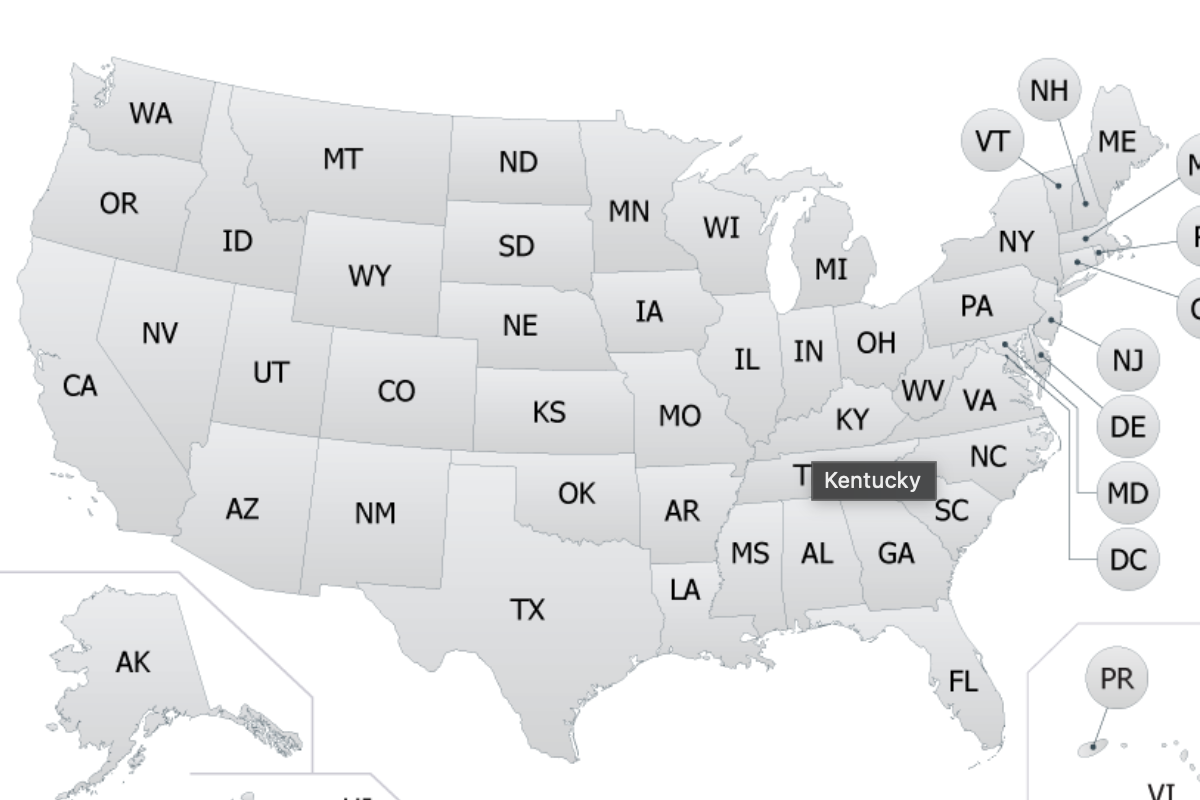
SAMHSA – Buprenorphine Treatment Practitioner Locatorr
Find practitioners authorized to treat opioid dependency with buprenorphine by state.
Medications for Opioid Use Disorder
SAMHSA Medication-Assisted Treatment (MAT)
Visit this site to gain information on MOUD, medications to treat opioid addiction, information and training resources, statues, regulations and guidelines and certification of OTPs.
Medications for Opioid Use Disorder
SAMHSA Opioid Treatment Program Directory
View opioid treatment programs by state.
Medications for Opioid Use Disorder
SAMHSA Tip 63 Manual
This Treatment Improvement Protocol (TIP) reviews the use of the three Food and Drug Administration (FDA)-approved medications used to treat opioid use disorder (OUD)—methadone, naltrexone, and buprenorphine—and the other strategies and services needed to support recovery for people with OUD. Scroll down to open the document.
Medications for Opioid Use Disorder
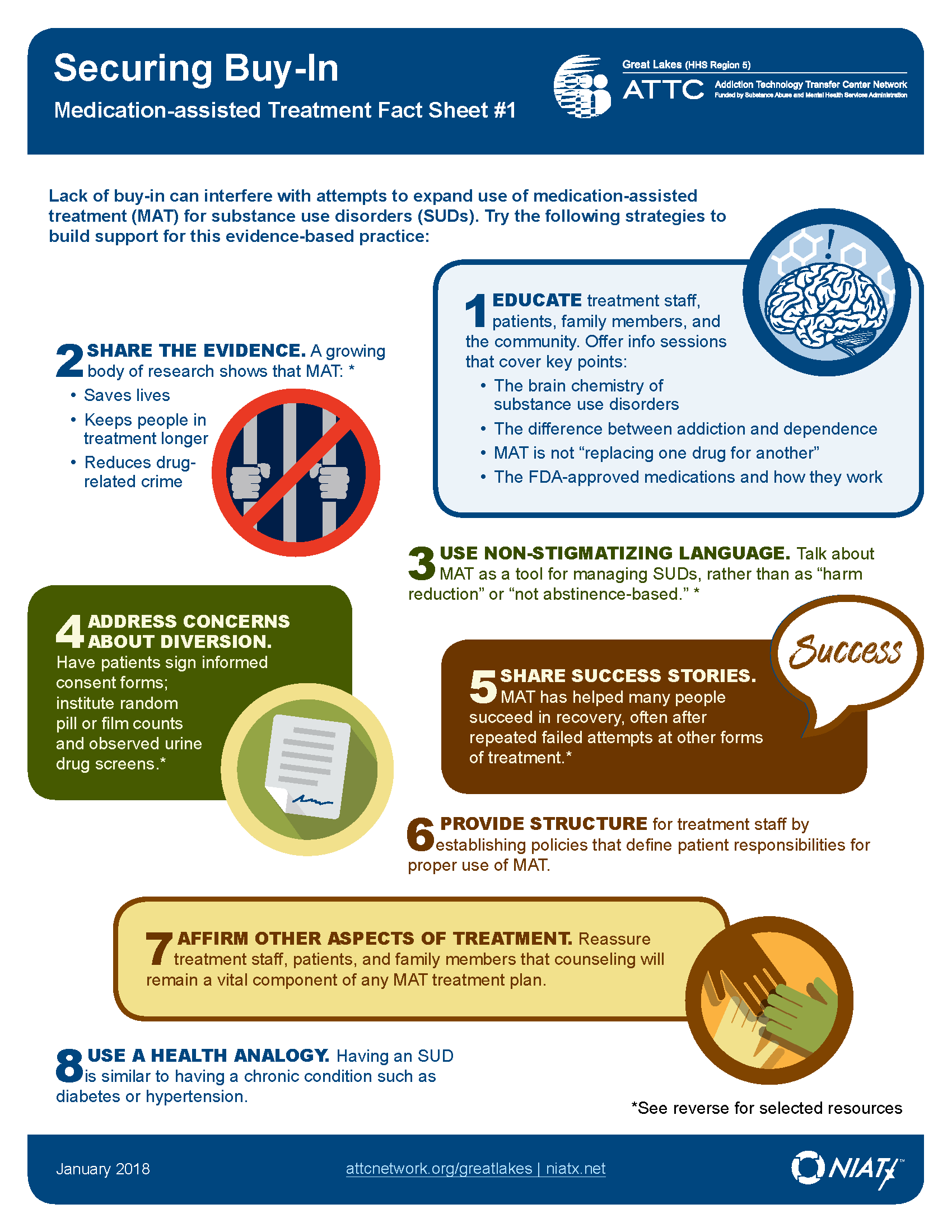
Securing Buy-In for MAT
Reference this handout for information on how to secure buy-in for MAT in your ED.
Medications for Opioid Use Disorder
The ASAM National Practice Guide for the Treatment of Opioid Use Disorder
These guidelines provide information on evidence-based treatment of opioid use disorder, and address all of the FDA-approved medications available to treat addiction involving opioid use and opioid overdose.
Medications for Opioid Use Disorder
Utilization Management for Medications for Addiction Treatment Toolkit
Provides a broad overview of medication utilization management techniques and describes ways that prescribers can facilitate patient access to medications.
Medications for Opioid Use Disorder
Yale University: ED-Initiated Buprenorphine
A comprehensive resource with information on ED-initiated buprenorphine for providers.
Medications for Opioid Use Disorder