Managing Pain in Pregnant Patients
*** This resource will focus on pain management and not the evaluation of the potential cause of the pregnant patient’s pain.***
Non-medication and non-opioid options should be considered first
Pain management in pregnant patients requires an individualized approach that is holistic and multimodal. Non-pharmacologic options should be prioritized followed by non-opioid analgesics. Non-Pharmacologic interventions such as exercise, physical therapy, behavioral approaches, and massage can all be helpful. Short courses of opioids only when necessary should be considered.
Pain is common in pregnancy. Areas of pain in pregnancy include:
- Low Back Pain (impacts approximately half of pregnancies)
- Pelvic Girdle Pain
- Abdominal and Chest Wall Pain
- Hip Pain
- Arthritis
- Headache
Acetaminophen is considered the drug of choice for mild/moderate pain during pregnancy.
Acetaminophen 650 to 1,000 mg every 4 to 6 hours (maximum 4 g/day) is considered a safe dosing regimen.
A short course (3-5 days) of NSAIDs may be considered during the second trimester in consultation with an OB-GYN physician
Ibuprofen 400 mg every 4 to 6 hours is considered a safe dosing regimen. Topical diclofenac gel can be considered for localized musculoskeletal pain.
Several other pain-relieving medications can be considered
Topical 4% or 5% lidocaine patch, EMLA cream, and capsaicin cream can also be considered. Trigger point injections with a local anesthetic can provide temporary relief of myofascial pain. For headache, 1mg IV Magnesium can be considered.
If opioids are needed, the lowest effective dose should be used and the course of treatment should not be longer than the expected duration of severe pain
If a pregnant patient has uncontrolled pain with the above non-opioid medications and interventions, the Centers for Disease Control and Prevention (CDC) and American College of Obstetricians and Gynecologists (ACOG) recommend using the lowest effective dose of opioids for the shortest duration when treating acute pain in pregnant persons. Pregnancy should not be a reason to avoid treating acute pain.
For postpartum pain, ACOG recommends stepwise, multimodal analgesia.
After vaginal delivery, acetaminophen or NSAIDs are first-line, with opioids added if needed. After cesarean delivery, standard medications include acetaminophen, NSAIDs, and/or low-dose, low-potency, short-acting opioids limited to the shortest reasonable course. For breastfeeding women, codeine should be avoided per FDA recommendations and oxycodone doses should not exceed 30 mg daily.
Filters
Selecting filters will auto-adjust the list.
Type at least three characters, and the list will auto-filter.

CDC: Pain Management, Opioid Use, and Pregnancy
A comprehensive resource on pain and OUD management during pregnancy and postpartum.
Pregnant Patients
Opioid Use Disorder (OUD) in pregnancy.
Use this guide as a prenatal care roadmap, guiding clinicians from core principles and screening through tailored counseling, medication management, and added supports to deliver comprehensive, coordinated care throughout pregnancy and beyond.
Pregnant Patients
Managing opioid use disorder in pregnancy
Through this podcast and webpage, learn how to counsel patients about the importance of medication and medication options, how to think about neonatal abstinence syndrome and recommendations for the postpartum period.
Pregnant Patients
Clinical Guidance for Treating Pregnant and Parenting Women With Opioid Use Disorder and Their Infants
This 2018 Clinical Guide provides comprehensive, national guidance for optimal management of pregnant and parenting women with opioid use disorder and their infants. It helps healthcare professionals and patients determine the most clinically appropriate action for a particular situation and informs individualized treatment decisions.
Pregnant Patients

Pregnancy and Substance Use: A Harm Reduction Toolkit
This toolkit was written in collaboration with the Academy of Perinatal Harm Reduction to promote the overall health and well-being of pregnant individuals who use substances and their families. This information is intended for use by pregnant and parenting people who use drugs, their loved ones, and their service providers.
Pregnant Patients
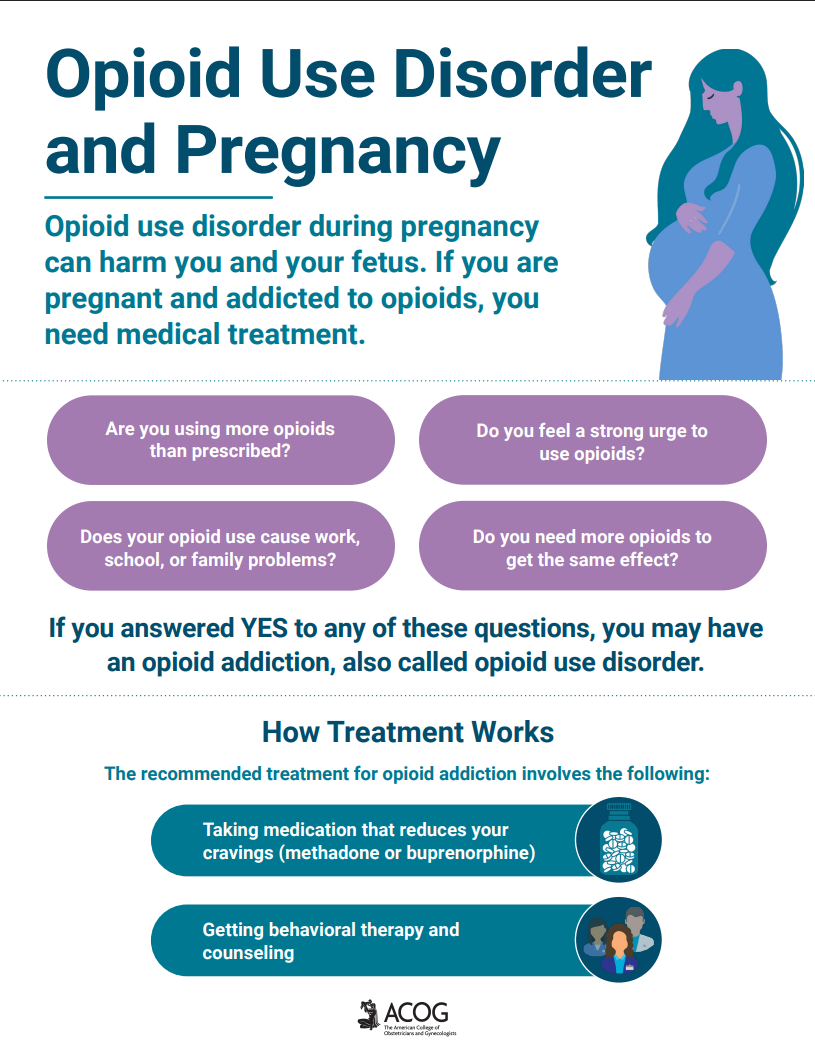
Opioid Use Disorder and Pregnancy
Patient focused information from the American College of Obstetricians and Gynecologists.
Pregnant Patients