Managing Pain in Older Adults
Pain is very common in older adults (individuals greater than 65 years of age) and the proportion of older individuals experiencing pain is increasing over time.
A combination of non-pharmacologic interventions and non-opioid medications are preferred.
Pain management in older adults requires an individualized approach that is holistic and multimodal. Short courses of opioids can be considered with the goal of improving function only if the benefits are expected to outweigh the risks. Older adults may not automatically report pain due to the assumption that pain is a normal part of aging or due to cognitive impairment. Evaluating functional status and speaking with caregivers is important in the assessment of pain in older adults.
Persistent pain in older adults is commonly due to:
- Musculoskeletal issues such as Osteoarthritis, Spine-related conditions, Fibromyalgia, and Myofascial pain
- Diabetic peripheral neuropathy
- Peripheral vascular disease (ischemic pain)
- Trauma-related pain (ex. Hip fracture)
- Cancer-related pain
- Central poststroke pain
- Chronic post-surgical pain
- Postherpetic neuralgia (shingles)
General Approach for Managing Pain in Older Adults
Review and evaluate the patient at baseline
This includes comorbidities, cognitive status, and functional status.
Also, review the patient’s list of medications. Consider potential interactions and medications that are associated with poor outcomes in older adults (BEERS criteria)
Assess the effect of chronic pain on the patient’s quality of life, gait, mood, and function.
A simple tool is the PEG – this entails a single-question assessment of pain frequency, followed by a 3-question (pain, enjoyment of life, general activity) functional assessment for patients with chronic pain.
Elicit the patient’s treatment goals and expectations.
See the “Effective Conversations” section for conversation starters.
Recommend and prescribe a multimodal treatment plan that prioritizes functional improvements.
- Physical Therapy (or an exercise program / movement-based program like tai chi or yoga)
- Cognitive behavioral approach & Self-management programs to reduce feelings of distress and promote focus on living well / quality of life
- Mindfulness-based intervention (MBI)
- Acupuncture
- Massage
- Electric physical modalities (transcutaneous electrical nerve stimulation (TENS))
- Use a combination of analgesics that work with complementary mechanisms to enhance effectiveness
Acetaminophen is the first-line pharmacologic treatment for mild-to-moderate pain
- Avoid long-term use of oral nonsteroidal anti-inflammatory drugs (NSAID) due to the cardiovascular, gastrointestinal, and renal risks; consider a topical NSAID
- Consider topical agents such as capsaicin, rubefacients (e.g., menthol and salicylate ointments)
- Consider serotonin-norepinephrine reuptake inhibitors (SNRI) in those with comorbid depression
- Consider pregabalin and gabapentin for patients with diabetic neuropathy / neuropathic pain
- Consider topical Lidocaine for focal pain management
- Consider a short course of opioids (beware of sedation, dizziness risk of falls); transdermal buprenorphine may be a good option as it has a favorable side effect profile and can be used for opioid-naive patients with chronic pain (less sedation, less respiratory depression, less constipation, safe in those with renal impairment)
Revisit and revise the plan over time
Revise and revisit based on what is improving the patient’s function and what is not.
Filters
Selecting filters will auto-adjust the list.
Type at least three characters, and the list will auto-filter.
NIA: Pain and Older Adults – Understanding Pain and How You Can Get Help
This 2023 booklet provides practical information for patients and their families on understanding pain and how to get help for it.
Older Adults

AgeWays: Understanding and Managing Chronic Pain in Older Adults
A website with resources and information for older adults and their caregivers.
Older Adults

Pain Management in Older Adults
This webpage was updated in 2025 and shares basic information about pain for patients and caregivers.
Older Adults

American Chronic Pain Association (ACPA)
This organization’s website has a diversity of resources for understanding pain conditions and management.
Older Adults

University of Iowa: GeriatricPain.org
This site is dedicated to providing quality resources and tools for pain care for older adults. Here, clinicians, patients, and family caregivers have access to free evidence-based pain assessment tools, pain management strategies, and resources to help identify and manage pain in older adults.
Older Adults
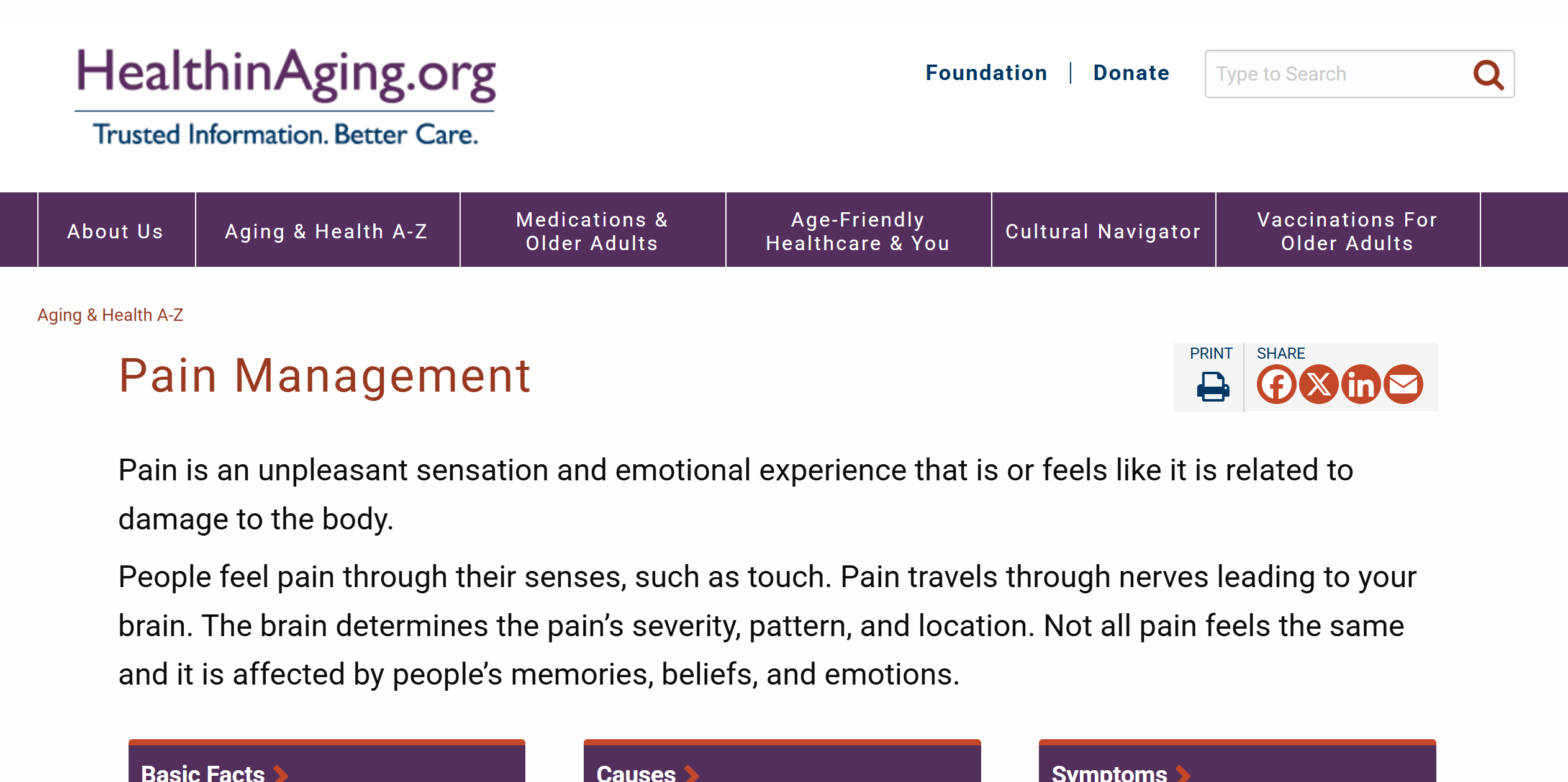
HealthinAging.org: Pain Management
This web page has a comprehensive review of pain in older adults including basic facts, diagnostic approach, and treatment / management.
Older Adults

2022 CDC Clinical Practice Guideline at a Glance
This web page and the guidelines it focuses on has a lot of great general information regarding prescribing opioids for pain.
Older Adults

GeriPal: Exploring the Nature of Chronic Pain
In this 2022 GeriPal podcast episode with Haider Warraich, listen as Warriach and the hosts explore the nature of chronic pain.
Older Adults
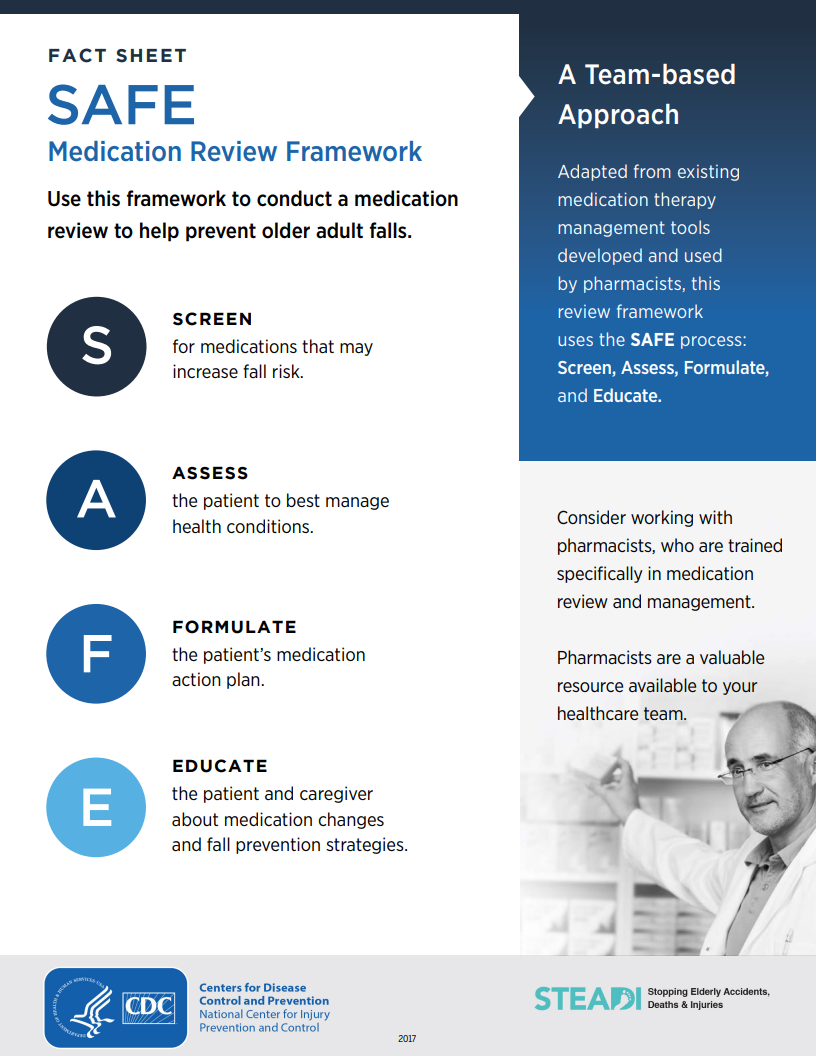
SAFE Medication Review Fact Sheet
Opioids are one of multiple types of medication that can increase risk for falls in older adults. Sponsored by the CDC and STEADI, this framework helps providers conduct a medication review to aid in the prevention of older adult falls.
Older Adults

SAMHSA: Preventing Medication and Alcohol Misuse Among Older Adults
Within this comprehensive resource focusing on the interactions of medication, alcohol, and mental health in older adults, learn how to prevent medication and alcohol misuse with specific prevention strategies and case examples of successful prevention programs. For this information, focus on pages 49-52; 63-66.
Older Adults

NCOA: Safe Pain Relief for Older Adults – Effective Tools and Solutions
This article provides safe, effective tools and solutions for pain management among older adults.
Older Adults
NCOA: Pain Management Support
This webpage provides a variety of resources and practical tips—like how to talk with doctors, understand treatment options, use pain scales, and prepare for safe recovery at home—to help make pain relief more effective.
Older Adults