Opioid Tapering Guidelines
Opioid tapering is finding a lower dose of opioid that works best for the patient, while opioid deprescribing is tapering with the goal of taking the patient off the opioid completely.
Opioid tapering or deprescribing should be considered when the potential harms of opioid therapy outweigh the potential benefits.
This requires shared decision-making to develop a tapering, deprescribing and/or rotation plan that considers the patient’s circumstances, goals, and preferences.
Elements of patient-level opioid stewardship include:
- starting at the initial prescription with goal setting and reasonable expectations of opioid therapy
- ongoing discussions of risks/harms
- discussing how the tapering/deprescribing/rotation plan will benefit the patient
Consider Benefits vs. Harm
Think about the benefits for the patient vs the harms. Some questions to consider are:
- Has the patient’s function improved since starting the opioid?
- What side effects is the patient experiencing?
- Has the risk profile of the opioid changed for the patient?
Taper if the benefits outweigh the risks, but the dose is excessive
Deprescribe if risks clearly outweigh benefits, and non-opioid alternatives can support pain management
Rotate to buprenorphine if the opioid was working, but risk profile remains high
Dose reduction information for tapering
Think about the benefits for the patient vs the harms. Some questions to consider are:
- Tapering with a gradual dose reduction of 5-10% of the MME (morphine-milligram-equivalent) daily dose every 2-4 weeks; the patient may require a slower taper or pauses.
- Frequent monitoring (at least monthly) – how is the patient’s response to the lower MME dose?
- Minimizing withdrawal symptoms (treating nausea, diarrhea, etc.)
- Maximizing the use of non-opioid pain management (NSAIDs, Acetaminophen, Physical Therapy, Cognitive Behavioral Therapy, Mindfulness etc.)
Filters
Selecting filters will auto-adjust the list.
Type at least three characters, and the list will auto-filter.
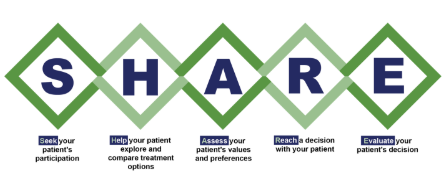
AHRQ: The SHARE Approach
A clinician-led shared decision-making model with five essential elements for meaningful dialogue with patients exploring benefits, harms, and risks of options and what matters most to them. AHRQ offers a free workshop curriculum to train clinicians in skills and techniques to work with patients to make the best possible healthcare decisions.
Opioid Tapering Guidelines

The Canadian Medication Appropriateness and Deprescribing Network
A comprehensive resource regarding tapering and deprescribing. Also has patient facing information.
Opioid Tapering Guidelines

NHS: Opioid Tapering Resource Pack
A comprehensive resource regarding tapering and deprescribing. Includes information regarding fentanyl patches. Also has patient facing information.
Opioid Tapering Guidelines
HHS Guide for Clinicians on the Appropriate Dosage Reduction or Discontinuation of Long-Term Opioid Analgesics
A comprehensive resource regarding tapering and deprescribing.
Opioid Tapering Guidelines

Centre for Addiction and Mental Health: Tapering opioids in pain patients at risk of unhealthy use
A comprehensive resource regarding opioids in general and tapering and deprescribing.
Opioid Tapering Guidelines
Tapering off opioids: When and how
Not sure how to taper off opioids? Visit this site to learn more about tapering safely and effectively and managing your withdrawal symptoms.
Opioid Tapering Guidelines
Opioid Taper Decision Tool
Designed to assist Primary Care providers in determining if an opioid taper is necessary for a specific patient, in performing the taper, and in providing follow-up and support during the taper.
Opioid Tapering Guidelines
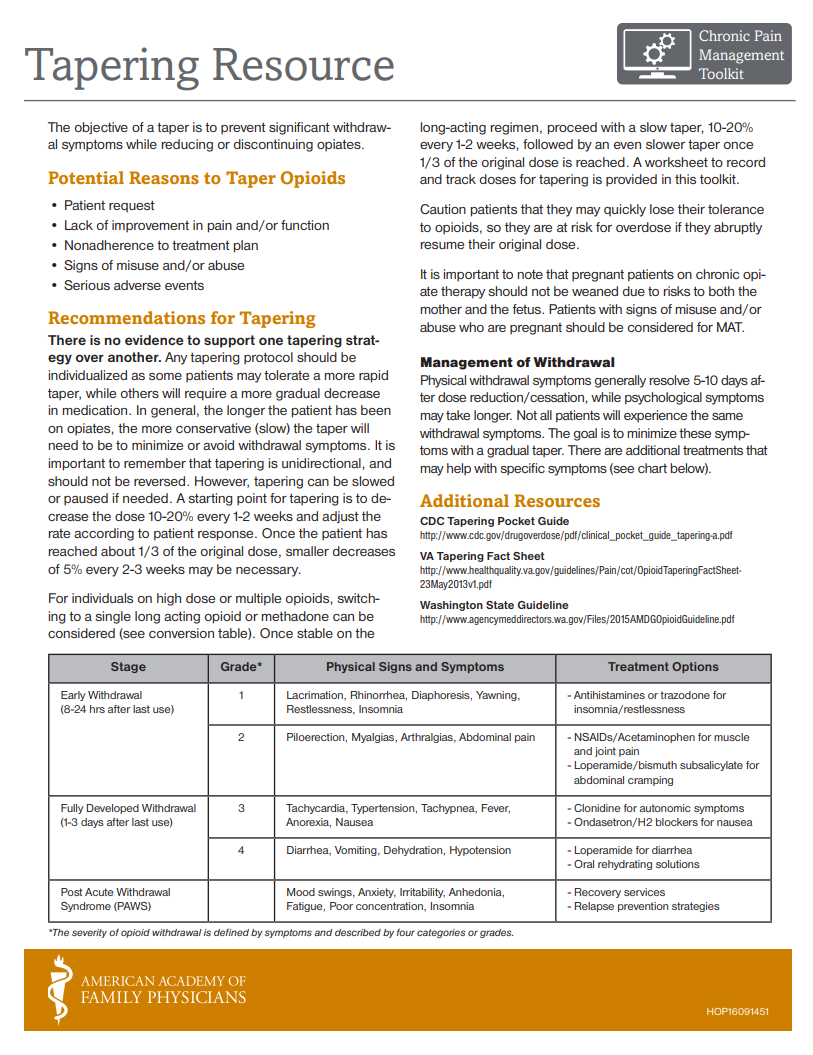
American Academy of Family Physicians’ Opioid Tapering Resource
Find information on reasons to taper, recommendations for tapering, along with the physical signs and symptoms and treatment options associated with each stage of withdrawal.
Opioid Tapering Guidelines