
Chronic Pain in Patients living with HIV / AIDS
More than 50% of all people living with HIV (PLWH) experience chronic pain with prevalence increasing with age. Peripheral neuropathy from the neurotoxic effects of the HIV virus and from the nucleoside analog reverse-transcriptase inhibitors (NRTIs) are the primary causes of acute and chronic pain. Chronic pain in PLWH is often neuropathic and musculoskeletal and involves multiple body locations.
Chronic pain in PLWH negatively impacts quality-of-life and is associated with:
- poor adherence to anti-retroviral therapy (ART)
- missed HIV clinic visits
Chronic pain in PLWH is often undertreated, particularly in specific populations.
The treatment of chronic pain in PLWH should have a biopsychosocial approach with multimodal treatment that emphasizes non-pharmacologic therapies and medications that target neuropathic pain.
Start with a standardized screening for chronic pain:
- How much bodily pain have you had during the last week? (none, very mild, mild, moderate, severe, very severe)
- Do you have bodily pain that has lasted for more than 3 months? (yes, no)
Remark: A response of moderate pain or more during the last week combined with bodily pain for more than 3 months can be considered a positive screen result.
Nonpharmacological treatments for chronic pain to consider
- Cognitive behavioral therapy promotes patient acceptance of responsibility for change and the development of adaptive behaviors (eg, exercise) while addressing maladaptive behaviors (eg, avoiding exercise due to fears of pain).
- Yoga is recommended for the treatment of chronic neck/back pain, headache, rheumatoid arthritis, and general musculoskeletal pain
- Physical and occupational therapy
- Hypnosis is recommended for neuropathic pain
- Acupuncture
Nonopioid Medication Recommendations
- Acetaminophen and nonsteroidal antiinflammatory drugs (NSAIDs) are recommended as first-line agents for the treatment of musculoskeletal pain.
- Gabapentin is recommended as a first-line treatment of chronic HIV-associated neuropathic pain (A typical adult regimen will titrate to 2400 mg per day in three divided doses (i.e. 800 mg TID). Evidence also supports that gabapentin improves sleep.
- If patients have an inadequate response to gabapentin, clinicians might consider a switch to pregabalin, a trial of a serotonin-norepinephrine reuptake inhibitor or a trial of a tricyclic antidepressant
- Capsaicin is recommended as a topical treatment for the management of chronic HIV-associated peripheral neuropathic pain
- Medical cannabis may be an effective treatment in appropriate patients
- Alpha lipoic acid (ALA) may be of some benefit in patients with difficult-to-treat neuropathic pain.
- Experts recommend against using lamotrigine to relieve HIV-associated neuropathic pain.
Filters
Selecting filters will auto-adjust the list.
Type at least three characters, and the list will auto-filter.

Supporting People Aging with HIV: The Role of Palliative Care and Geriatrics Clinicians
Written in 2025, this article explores how geriatrics and palliative care clinicians can work together to support people through the complexities of aging with HIV—with comprehensive care and advance care planning.
HIV
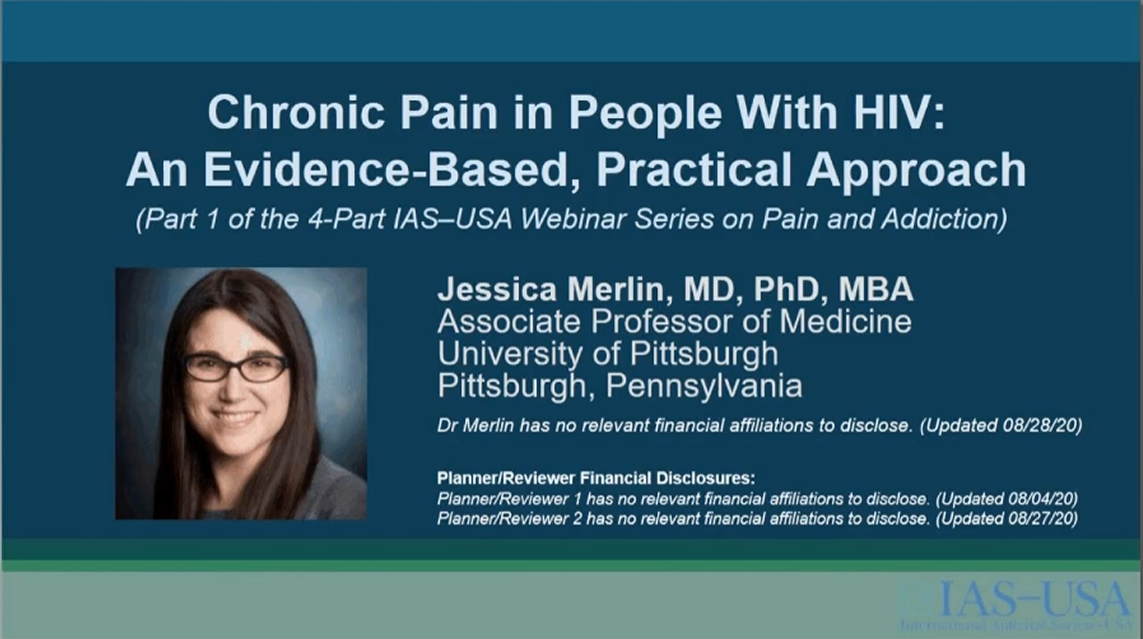
Chronic Pain in People With HIV: An Evidence-Based, Practical Approach
In this webinar hosted by Dr. Jessica Merlin, learn more about evidence-based and practical approaches to managing chronic pain among those with HIV.
HIV

IDSA Clinical Practice Guidelines Directory
These guidelines were developed by a panel of experts who conduct systematic reviews of available information to develop evidence-based recommendations. Using the GRADE Process, this assists practitioners and patients in making decisions about appropriate health care for specific clinical circumstances.
HIV
NYSDOH Aids Institute: Primary Care for Adults With HIV
Updated in 2025; a comprehensive resource from the New York State Department of Health AIDS Institute (NYSDOH AI) on primary care for adults with HIV.
HIV

Aidsmap: Pain and HIV
An article from 2025 that reviews essential information about pain and HIV.
HIV

thewellproject: HIV-Related Pain
An article from 2024 with comprehensive education for patients on HIV-related pain, assessment, and management.
HIV